
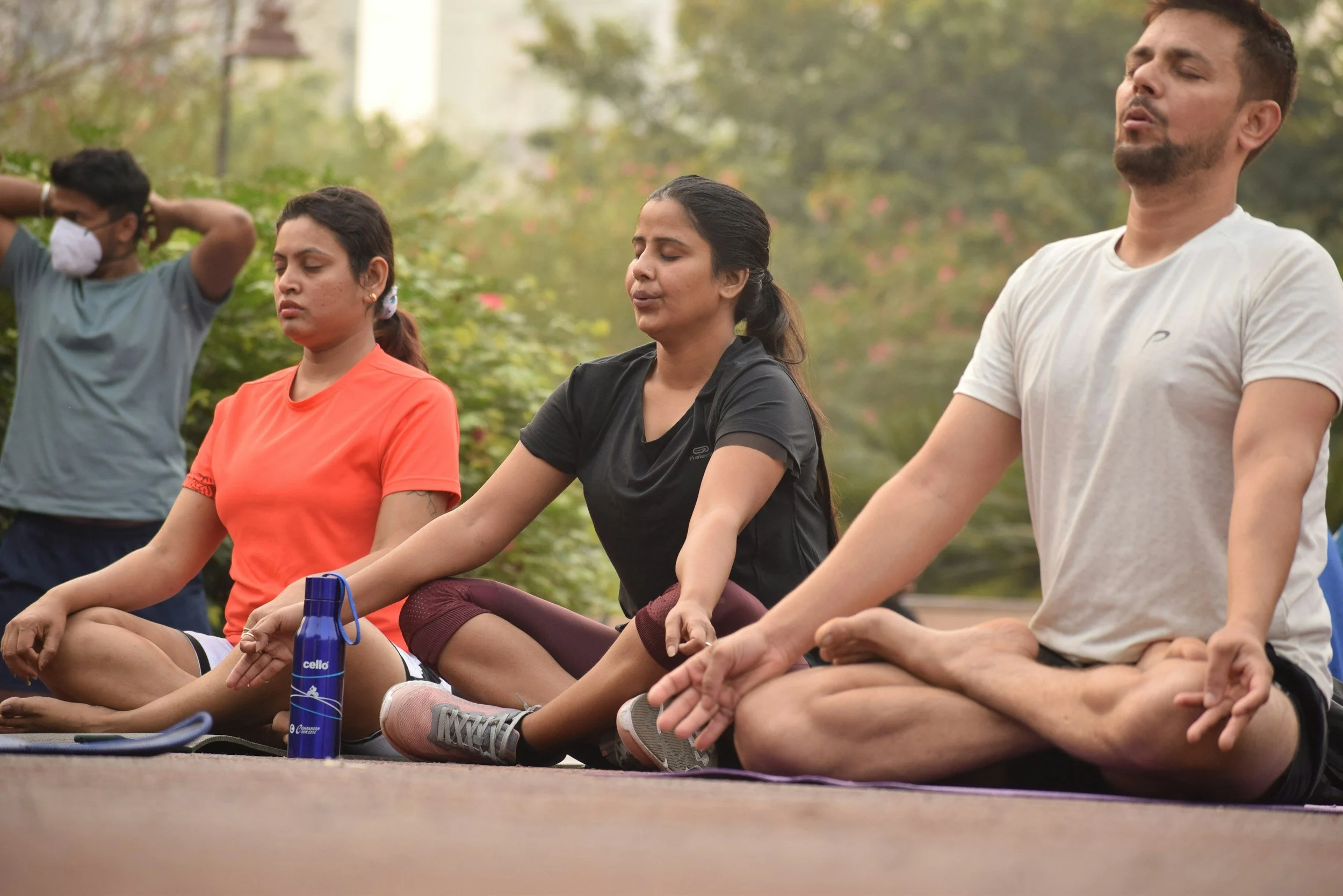
Yoga
What is Yoga?
Yoga in the West has become synonymous with thin white bodies stretching themselves into impossible shapes, and being ‘good’ at yoga means being able to hit those perfect poses. However, this is not yoga. Yoga actually means ‘union’, and is about uniting body, breath, heart, mind, soul and purpose. You can practice yoga sitting still, eating, breathing, walking the dog. The movement part of yoga, the asanas are just one of the eight limbs of yoga, and are deigned to prepare the body for meditation, so that we may sit with a straight spine for extended periods of time, and to balance the energy in the body. None of this is about bending into a pretzel or nailing a headstand.
When we approach our asanas with union and balance and mind, they become a tool for learning lessons to take into life. Sitting with experiences, emotions and sensations without judgement. Listening deeply to our body and understanding what it is telling us. Separating our ‘self’ from the body and the mind. Quietening the mental chatter. Releasing stuck emotions, patterns and memories from where they are stored in the body, allowing us to decide how we move through the world, responding instead of reacting.
The asanas are an important part of this, but only one limb of Yoga.
The Eight Limbs of Yoga Are:
Yama (abstinence)
Niyama (observance)
Asana (posture practice)
Pranayama (breath control)
Pratyahara (sense withdrawal)
Dharana (concentration)
Dhyana (meditation)
Samadhi (contemplation, absorption, superconscious state)
What type of Yoga do you teach?
I am trained in Vinyasa yoga, which is also known as ‘flow’ yoga. We work on sets of poses strung together, linking movement to breath. The breath is the most important thing here - not the pose. By learning to flow movement in time with your breath, you can centre and ground yourself, finding a core from which to move on and off the mat.
However, I meet my clients wherever they are, and with whatever they need. Sometimes Hatha yoga might be more appropriate - moving into a pose, holding, and then resting. Or Yin yoga - holding supported poses for extended periods of time, which requires less energy, and works on the fascia. We all have our own needs that can also change day-to-day and hour-to-hour. Truly practicing yoga means honouring that.
Vinyasa yoga comes ultimately from Tirumalai Krishnamacharya, known as “the father of modern yoga”. He taught three influential students that created their own branches of yoga that we are familiar with today. B.K.S. Iyengar started Hatha Yoga, Pattabhi Jois started Ashtanga Yoga, and T.K.V. Desikachar started Vinyasa Yoga. My lineage is that I was taught by Michelle Young, who was the student of Richard Miller, who was taught by Desikachar.
Where is Yoga from?
Yoga is a tradition from the Indian subcontinent. It is unclear just how far back it stretches, but there is evidence to support that it began to emerge more than 4000 years ago, with the Vedas, a collection of hymns and other Hindu texts, written around 2000-1500 BCE. These are often considered the beginning of the Yoga tradition, which was then further shaped by the Bhagavad Gita, which helped to shape yoga philosophy, written about 2500 years ago. Around the same time, or maybe a little later, the yoga sutras of Patanjali were written. Not much is known of Patanjali, or even such a person existed - the sutras could have been collected from many wise people. These sutras created the eight limbed path of Yoga.
It is some time until we see further development of the yogic path, when between the twelfth and fourteenth centuries CE, Hatha Yoga was developed. The Hatha Yoga Pradipika was written in the fourteenth century CE by Swami Swatmarama, but there are only a few short teachings on asanas - the goal was enlightenment.
What are the benefits of Yoga?
Yoga has an incredible range of benefits, for physical, mental and emotional issues.
It can help us to recover from burnout and exhaustion
Yoga has an enormous effect on a range of menstrual issues, including;
And this meta-analysis of 24 studies into the effect of Yoga on menopausal symptoms, showed that yoga had a positive effect on
Psychological menopausal symptoms
Somatic menopausal symptoms
Urogenital menopausal symptoms
Sleep quality
Anxiety
Depressive symptoms
Body mass index
Systolic blood pressure
Diastolic blood pressure
Aside from these, yoga has also been proven to:
Reduce arterial stiffness, lower blood sugar and cholesterol levels
Improve positive emotional ratings over negative ones, reducing risks of anxiety and depression
Help people relax and increases their ability to handle stress