
Mudras
What are Mudras?
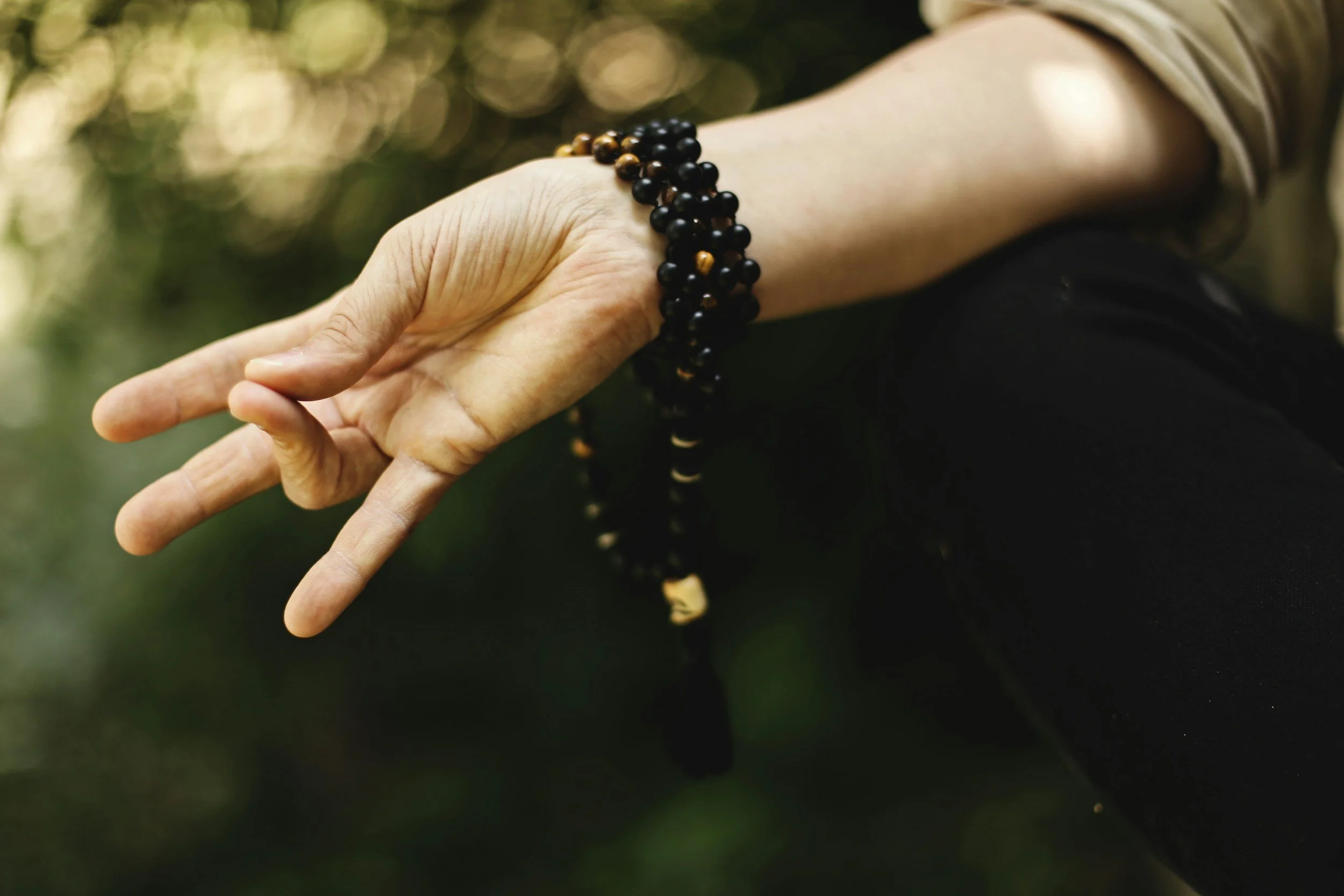
Mudras are ‘hand seals’, symbolic hand gestures that have been used in yogic traditions for millennia, used in Hinduism and Buddhism. They work by directing energy (prana) around the body in specific ways, helping to bring balance to the body, focus the mind, and achieve different states of consciousness (such as dharana - concentration and dhyana - meditation).
In yogic philosophy, each finger represents a different element, and by combining and touching them in different ways, we can increase some elements, and decrease others.
Thumb – Fire (Agni)
Index finger – Air (Vayu)
Middle finger – Space (Akasha)
Ring finger – Earth (Prithvi)
Little finger – Water (Jala)
As we stimulate these different points, we also activate the nervous system, which is connected throughout the body to different organs and systems. As we maintain the mudra, it can help direct energy where we need it to go, relieving symptoms, clearing the mind, raising or lowering energy levels, and stabilising our emotions.
They also act as symbols that can increase our ability to enter dhyana - meditation. Each mudra has different qualities, and so connects us to different qualities - empowerment, wisdom, connection, peacefulness, transformation and many more. They are subtle, but powerful when worked with consistently.
Common mudras are:
Prana Mudra, the Mudra of Vital Energy
Gyan Mudra, the Mudra of Wisdom and Knowledge
Apan Mudra, the Mudra of Purification and Elimination
Dhyana Mudra, the Mudra of Meditation
Anjali Mudra, the Mudra of Reverence, or ‘prayer hands’
How do you work with Mudras?
It is best to start with one or two, and work with them every day. They can be incorporated into an Asana practice (for example, Prana mudra can really get energy flowing, great for getting the body moving), or with Pranayama (such as Gyan mudra, which helps to ground us and focus the mind). It is wonderful to combine with a morning practice, such as making your morning herbal tea, then practicing Pranayama while holding your mudra as you wait for it to cool.
I guide my clients in exploring Mudras, to see what feels right for them. It is another way of taking our healing into our own hands (literally), and I practice Mudra every single day as a part of my Pranayama practice. I strongly recommend trying this, even if you have not before.
What are the benefits of Mudras?
Mudras are less well scientifically studied than other branches of Yoga (like Asana (movement), Pranayama (breath) and Dhyana (meditation). However, we can see that holding Mudras stimulates nerve endings, pressure points, and subtle reflex zones. This stimulation sends signals to the nervous system (including the brain) and the endocrine system, helping to regulate hormonal messages through the body, reducing the impact of stress and anxiety on the body, which affects every single physical system. The same principles apply to acupressure and neurostimulation techniques.
The key benefits are:
Improved concentration
Reduced stress and anxiety
Balanced energy
Emotional health
Enhanced spiritual practice
Relieve physical symptoms and ailments
Increased vitality