
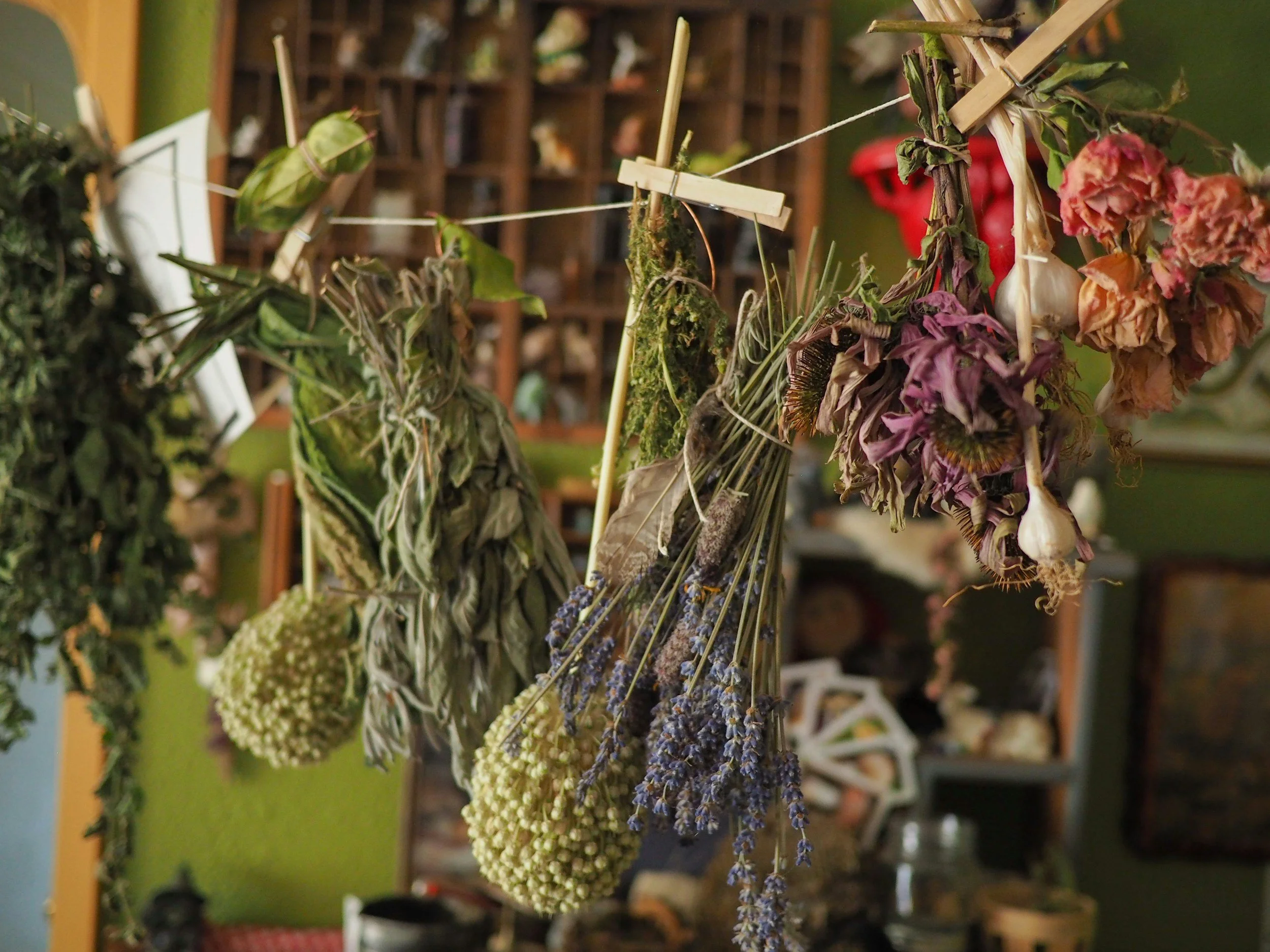
Herbalism
What is Herbalism?
Essentially, Herbalism is the use of plants to create medicines, in the form of tinctures, teas, glycerites, salves, decoctions, capsules and many more. Herbalism has been practiced all over the world, and all through human existence. Basic instinct to use plants to help with physical issues can even be seen in cows and horses, that will be attracted to certain plants when they are suffering from conditions or are in pain. Humans have developed this over the millennia to a deep understanding of how different plants interact with the human body.
There are many types of herbalism that are practiced these days. Ayurveda from India and Traditional Chinese Medicine are widely practiced. In the West, we have a rather magpie-style herbal tradition, that has gathered bits from Roman and Greek texts, then added in bits and pieces from around the world as we have colonised it. There is also a divide here, between a science-based approach, with defined dosages and pills, and ‘energetic’ herbalism, which leans more into intuitive understanding and building relationships with plants.
In Herbalism, as opposed to modern Western medicine, we treat the person, not the issue. Each person is different, and though certain symptoms might be the same, their root causes could be different. Four people might complain of a headache - but one is because of a cold, one is because of heat stroke, one is hormonal imbalance, and one is a neurological disorder. Does it make sense that we give all four people the same remedy? No - each person, and each root cause must be dealt with differently.
By understanding our individual natures, we can bring balance back to the body with herbal support. Usually we have early warning signs that something is awry, an unease or discomfort. This is the body moving out of balance. The herbs we work with must help us to move back into balance, which changes from person to person. Understanding this is key to supporting our body back to health, rather than pushing too far, or not far enough.
This means that the way that we work with herbs, and the herbs that we work with will change over time. As our needs change, through the seasons, across a menstrual cycle, or as we age, we change, and so the herbs will change too.
What kind of Herbalism do you practice?
I mix together the Western styles of science-based and energetic herbalism. I believe in the scientific approach, and studies can help guide decisions and reinforce intuitively held knowledge - for instance, that lavender relaxes the nervous system, or that rosemary is good for memory and cognition. However, the relationships created in energetic herbalism bring a deep awe and appreciation for the plants that you work with.
The mindfulness and nature connection in energetic herbalism has its own benefits, the same as any form of meditative practice. It also encourages us to really listen to our bodies and feel what is the right plant to work with at any given time. This ability to tune in and listen to ourselves will help us to understand what is going on, where we want to get to, and how to get there. It empowers us.
I will start by choosing two or three herbs for my clients to try, of which they will pick one. Then they can build a relationship with the plant, and see how it affects them. Does it work? Are there side effects? Does it feel good? And then build from there, guiding my clients on how they can continue to work with herbs and make their own medicines. Power back in our own hands.
What are the benefits of Herbalism?
Herbalism offers a natural alternative to conventional pharmaceuticals, often with fewer side effects
Herbal remedies address the root cause of health issues, promoting balance and overall well-being.
Many herbs can be grown at home or easily obtained, making herbal medicine more accessible and affordable compared to prescription medications.
Herbalists can tailor remedies to individual needs, considering factors such as age, constitution, and specific health concerns.
Herbs can be used proactively to strengthen the immune system, promote resilience, and prevent the onset of illness.
Herbal formulations often combine multiple plants, which work together to promote health and balance
Herbalism empowers individuals to take an active role in their health, fostering a deeper connection with nature and their own well-being.